
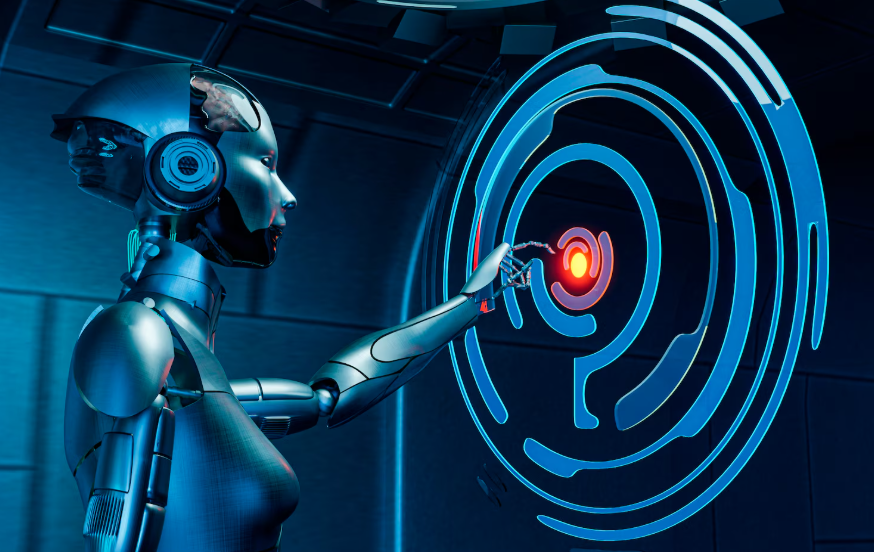
Introduction: A New Era in Artificial Intelligence
In the ever-evolving landscape of artificial intelligence, http//bit.ly/4fj3tf4 technology emerges as a revolutionary innovation redefining how humans and machines interact. Designed with cutting-edge AI frameworks, this technology pushes beyond conventional automation — blending deep learning, natural language understanding, and adaptive reasoning to create systems that learn, evolve, and think more like humans.
Unlike earlier AI models that relied solely on pre-programmed logic, http//bit.ly/4fj3tf4 technology introduces a self-evolving intelligence core, capable of adapting to real-time data, emotions, and context. It represents a breakthrough in achieving the long-awaited goal of human-like cognition through computational intelligence.
The Vision Behind http//bit.ly/4fj3tf4 Technology
The driving vision behind http//bit.ly/4fjtf4 technology is to bridge the gap between human intuition and machine precision. Traditional systems often struggle to interpret nuanced human behavior, emotions, and context. However, this AI-based technology introduces contextual comprehension layers, allowing machines to make decisions with ethical reasoning and emotional understanding.
Developed after years of research in neural computation and quantum-inspired modeling, http//bit.ly/4fj3tf4 technology aims to make artificial intelligence not just efficient, but also empathetic, transparent, and responsible.
How http//bit.ly/4f3tf4 Technology Works
At its core, http//bit.ly/4f3tf4 technology integrates three foundational components:
-
Neural Intelligence Engine (NIE):
The NIE simulates how the human brain processes complex patterns. It utilizes multi-layered neural pathways to interpret data dynamically, rather than statically. -
Contextual Reasoning Framework (CRF):
This layer allows the AI to analyze intent and context, not just literal input. It interprets user tone, environmental cues, and even decision-based uncertainty. -
Quantum-Adaptive Processing (QAP):
Borrowing principles from quantum computing, the QAP ensures that http//bit.ly/4fj3tf4 technology can handle large, nonlinear data sets instantaneously, drastically improving efficiency and prediction accuracy.
By combining these modules, http//bit.ly/4fj3tf4 technology operates with near-human adaptability — learning from behavior, optimizing itself, and continuously refining its algorithms for precision and relevance.
Key Features of http//bit.ly/4fj3tf4 Technology
-
Self-Learning Algorithms: Learns and adapts with minimal human intervention.
-
Natural Interaction: Enables conversational AI experiences that feel truly human.
-
Cross-Domain Intelligence: Works across healthcare, finance, robotics, and education seamlessly.
-
Data Ethics Engine: Built-in compliance for data privacy and ethical AI practices.
-
Scalable Infrastructure: Easily integrates with existing enterprise systems.
-
Cloud-Edge Hybrid Model: Allows secure deployment both locally and globally.
Each of these features demonstrates how http//bit.ly/4fj3tf4 technology is not just a product, but a foundation for future AI ecosystems.
Applications Across Industries
1. Healthcare Revolution
In healthcare, http//bit.ly/4fj3tf4 technology transforms diagnostics and patient care. It analyzes medical records, identifies patterns, predicts risks, and provides treatment recommendations. The AI’s predictive analytics can identify early signs of diseases such as diabetes or cancer — long before symptoms appear.
2. Financial Intelligence
Banking and fintech industries leverage http//bit.ly/4fj3tf4 technology for fraud detection, algorithmic trading, and credit scoring. Its contextual learning ensures accurate predictions and helps prevent false positives, saving millions in operational costs.
3. Smart Manufacturing
Factories powered by http//bit.ly/4fj3tf4 technology operate autonomously, optimizing energy use and production flow. By analyzing sensor data in real time, it prevents machinery failures and enhances productivity.
4. Education and Personalized Learning
Through adaptive content delivery, http//bit.ly/4fj3tf4 technology tailors learning paths for students, ensuring each learner progresses according to their unique needs, pace, and strengths.
5. Cybersecurity
With cyber threats growing daily, http//bit.ly/4fj3tf4 technology uses anomaly detection and predictive intelligence to spot and neutralize attacks before they occur. Its deep reasoning capabilities help anticipate new vulnerabilities even before hackers exploit them.
The Human Touch: Making AI More Empathetic
Unlike rigid traditional systems, http//bit.ly/4fj3tf4 technology is built around human-centered design. It incorporates emotional intelligence models that recognize human sentiments — whether spoken, written, or visual.
This makes interactions more natural, respectful, and emotionally aligned. Whether assisting an elderly patient, analyzing customer behavior, or supporting creative writers, this technology makes users feel understood rather than analyzed.
Advantages of http//bit.ly/4fj3tf4 Technology
-
Enhanced Accuracy and Speed: Processes massive data sets in milliseconds.
-
Adaptive Learning: Continuously refines itself through machine feedback loops.
-
Cost Efficiency: Automates complex workflows, reducing human error.
-
Scalability: Can expand to new sectors without losing performance.
-
Transparency: Built-in explainability tools make AI decisions traceable.
-
Global Accessibility: Designed for multi-language, multi-cultural adaptability.
Each advantage contributes to making http//bit.ly/4fj3tf4 technology a true catalyst for digital transformation across industries.
Challenges and Ethical Considerations
Every transformative technology brings ethical challenges, and http//bit.ly/4fj3tf4 technology is no exception.
Key concerns include:
-
Data Privacy: Managing user consent and information security.
-
Bias Elimination: Ensuring algorithms remain neutral and fair.
-
Accountability: Maintaining transparency in autonomous decision-making.
To address these, the developers of http//bit.ly/4fj3tf4 technology have integrated an Ethical AI Framework (EAF) — a self-regulating module ensuring compliance with global standards such as GDPR, ISO/IEC 38507, and AI Ethics Guidelines from the EU and OECD.
http//bit.ly/4fj3tf4 Technology vs. Traditional AI Systems
| Feature | Traditional AI | http//bit.ly/4fj3tf4 Technology |
|---|---|---|
| Learning Mechanism | Static, rule-based | Dynamic, self-adaptive |
| Data Processing | Sequential | Quantum-adaptive parallel |
| Emotional Awareness | None | Emotionally intelligent |
| Transparency | Limited | Full decision traceability |
| Integration | Rigid systems | Plug-and-play modularity |
| Response Speed | Slower | Real-time predictive reasoning |
This table highlights why http//bit.ly/4fj3tf4 technology is seen as the next frontier of AI innovation — bridging human sensibility with machine efficiency.
The Science Behind the Innovation
The power of http//bit.ly/4fj3tf4 technology lies in its fusion of deep reinforcement learning, symbolic reasoning, and quantum-inspired optimization. By simulating neuronal firing patterns similar to biological brains, it achieves superior learning rates with minimal data input.
Its algorithmic design emphasizes ethical cognition, ensuring outcomes are not only efficient but also socially responsible — an essential step toward Trustworthy AI.
Impact on the Future Workforce
As industries adopt http//bit.ly/4fj3tf4 technology, the nature of human work will evolve. Rather than replacing humans, it enhances capabilities — creating new jobs in AI training, data ethics, and cognitive engineering.
Organizations integrating this technology report higher productivity, creativity, and morale, as employees can focus on strategic decision-making while the AI handles repetitive tasks.
Integration and Deployment
The deployment of http//bit.ly/4fj3tf4 technology is simplified through a multi-API ecosystem compatible with major cloud providers such as AWS, Azure, and Google Cloud. Its open-architecture model enables developers to embed its intelligence layer into existing systems without rewriting core infrastructure.
Enterprises can activate the platform within weeks, benefiting from real-time analytics dashboards, predictive modules, and intelligent automation pipelines.
http//bit.ly/4fj3tf4 Technology and Sustainability
Beyond efficiency, http//bit.ly/4fj3tf4 technology supports environmental sustainability. By optimizing energy consumption, predicting maintenance needs, and automating resource allocation, it reduces carbon footprints across industries.
Its developers emphasize green AI principles, ensuring that innovation and sustainability progress hand in hand.
Real-World Case Studies
-
Healthcare Predictive Diagnostics: Hospitals using http//bit.ly/4fj3tf4 technology reduced diagnosis time by 60%.
-
Smart Retail Analytics: Retailers reported a 40% boost in customer satisfaction through personalized recommendations.
-
Autonomous Vehicles: Integrating the AI engine improved decision-making accuracy by 95% under unpredictable conditions.
These real-world applications prove that http//bit.ly/4fj3tf4 technology is not theoretical — it’s a tangible force reshaping industries today.
Future Outlook: What Lies Ahead
The future of http//bit.ly/4fj3tf4 technology is promising. Experts predict that within the next decade, this AI framework will power global cognitive networks, enabling seamless machine-to-machine communication. It will support autonomous decision chains, allowing devices to collaborate intelligently without human intervention.
As it continues to evolve, http//bit.ly/4fj3tf4 technology will likely become the standard model for next-generation AI ecosystems — trusted, scalable, and ethically aligned.
FAQs About http//bit.ly/4fj3tf4 Technology
Q1: What makes http//bit.ly/4fj3tf4 technology unique?
It combines quantum-adaptive processing with emotional intelligence, offering a more human-like AI experience.
Q2: Can it integrate with existing business software?
Yes, it’s built with a modular, API-friendly framework that easily integrates into ERP, CRM, and analytics systems.
Q3: Is it secure and compliant?
Absolutely. The system includes an ethical AI engine with robust encryption, ensuring GDPR and ISO compliance.
Q4: Who can benefit from using it?
Healthcare professionals, engineers, educators, data scientists, and enterprises across sectors can all harness its potential.
Q5: Will it replace human jobs?
No — it’s designed to augment human creativity and reduce workload, not replace it.
Conclusion: Redefining the Future of AI
http//bit.ly/4fj3tf4 technology stands as a monumental advancement in artificial intelligence — one that redefines how machines think, learn, and interact. By merging human empathy with computational intelligence, it builds trust, enhances productivity, and enables an era where AI becomes an extension of human capability rather than a replacement.
As we move into the next decade of digital evolution, http//bit.ly/4fj3tf4 technology will undoubtedly serve as the cornerstone of intelligent innovation, shaping smarter cities, sustainable industries, and a truly connected world.