
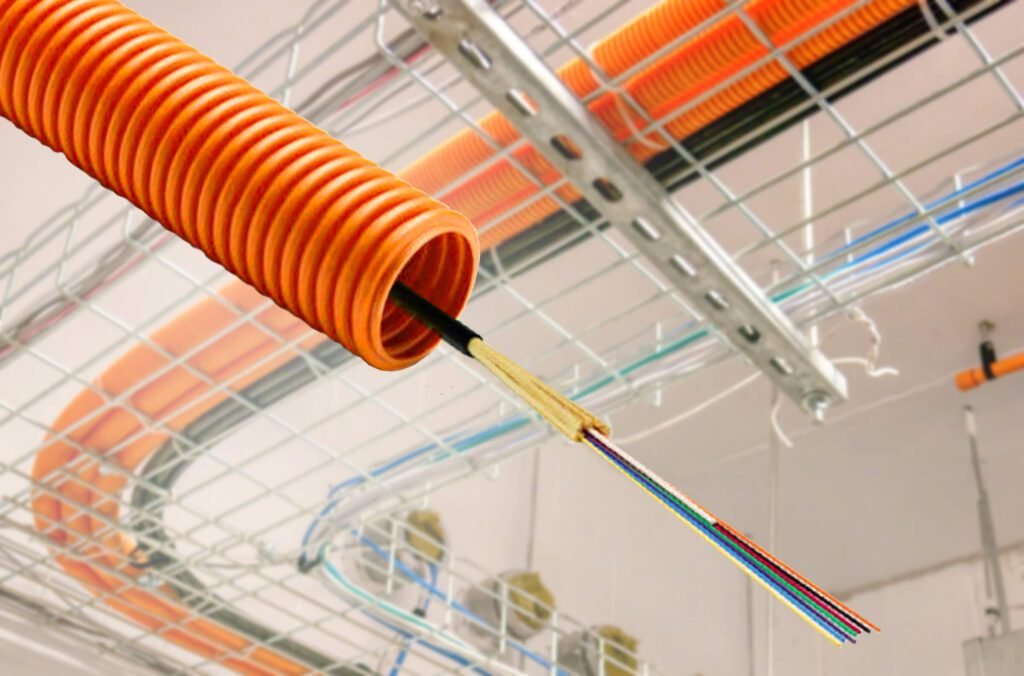
A complex network of wires and cables runs through every building, powering lights, machinery, and communication systems. Organizing and protecting this wiring is crucial for both functionality and safety. Conduits, raceways, and proper cable management are essential for keeping this network safe and orderly.
Understanding Conduits and Their Applications
A conduit is a tube or trough used to protect and route electrical wiring. It serves as a protective shell, shielding wires from impact, moisture, and chemical vapors. Conduits are essential in environments where wiring is exposed or needs extra protection, such as in commercial buildings, industrial sites, and outdoor installations.
There are several types of conduits, each designed for specific needs and environments.
Rigid Metal Conduit (RMC)
Rigid Metal Conduit is a heavy-duty, thick-walled tubing, typically made of galvanized steel or aluminum. RMC offers the highest level of protection against physical damage and is often used in demanding industrial and commercial applications. Its robust construction makes it suitable for routing wiring underground or through concrete.
Intermediate Metal Conduit (IMC)
Intermediate Metal Conduit is a thinner, lighter alternative to RMC but still provides substantial protection. It is easier to work with and less expensive than RMC, making it a popular choice for new construction projects in commercial buildings. IMC is also approved for outdoor use and in concealed or exposed locations.
Electrical Metallic Tubing (EMT)
Often called “thin-wall” conduit, Electrical Metallic Tubing is a lightweight and unthreaded tubing, usually made of galvanized steel. EMT is easy to bend and cut, which simplifies installation. It is primarily used for indoor applications in commercial and residential buildings where wiring requires protection but is not subject to severe physical damage. Because it is not threaded, fittings are secured with setscrews or compression-type fasteners.
Flexible Metal Conduit (FMC) and Liquid-Tight Flexible Metal Conduit (LFMC)
Flexible Metal Conduit, also known as “Greenfield,” is constructed from a helically wound metal strip. Its flexibility makes it ideal for connecting to equipment that vibrates or for routing wires around obstacles and in tight spaces. For environments with moisture, oil, or dirt, Liquid-Tight Flexible Metal Conduit (LFMC) is used. LFMC has a waterproof plastic coating over the flexible metal core, providing protection in damp or wet locations.
Rigid PVC Conduit (Polyvinyl Chloride)
Rigid PVC Conduit is a lightweight, versatile, and corrosion-resistant plastic tubing. It’s easy to install, can be bent using a special heating tool, and its joints are solvent-welded. PVC is an excellent choice for underground applications, as it won’t corrode when buried in soil or encased in concrete. It is also frequently used in wet environments.
Exploring Raceways and Their Applications
While the term “raceway” is often used interchangeably with “conduit,” it technically refers to any enclosed channel designed to hold wires and cables. This includes conduits but also extends to other systems like surface-mounted raceways and cable trays. Raceways are particularly useful for managing cables in existing structures where running wires through walls is impractical.
Surface-Mounted Raceways
These raceways are designed to be mounted directly on walls or ceilings, providing a channel for low-voltage data cables or standard electrical wiring. They are available in various materials, including plastic and metal, and come in different profiles to blend with interior decor. Surface-mounted raceways are a great solution for adding new outlets, running ethernet cables in an office, or hiding TV cords without cutting into drywall.
Cable Trays
Cable trays are open support systems used to manage large bundles of cables in industrial and commercial settings. They are typically made of steel, aluminum, or fiberglass and come in several styles, such as ladder, solid bottom, and wire mesh. Cable trays are common in data centers, manufacturing plants, and power generation facilities, where they support heavy data, communication, and power cables. Their open design allows for easy access for maintenance and upgrades.
Best Practices for Cable Management
Effective cable management is crucial for maintaining an organized and functional wiring system. It involves more than just routing cables; it requires a strategic approach to planning, installation, and long-term maintenance.
- Plan Your Routes: Before you start running cables, map out the most efficient and logical pathways. Consider future needs and leave extra space for additional cables.
- Label Everything: Clearly label all cables at both ends. This simple step saves immense time and frustration during troubleshooting or system upgrades.
- Use the Right Tools: Employ cable ties, clamps, and management panels to bundle and secure cables neatly. This prevents tangling and reduces stress on the cables and their connection points.
- Maintain Separation: Keep power cables separate from data cables to prevent electromagnetic interference (EMI), which can degrade network performance. Use separate conduits or a divider in your raceway.
- Respect Bend Radius: Every cable has a minimum bend radius. Bending a cable too sharply can damage the internal conductors and compromise performance, especially with fiber optic and high-speed data cables.
The Payoffs of Proper Cable Management
Investing time and resources into proper cable management yields significant returns. A well-organized system offers numerous benefits that extend beyond aesthetics.
- Improved Safety: Neatly managed cables reduce the risk of trips and falls. More importantly, they prevent overheating by ensuring adequate airflow and reduce the chances of electrical shorts that could lead to fires.
- Enhanced Performance: Organized cables are less prone to physical damage, kinking, and EMI. This ensures a stable and reliable connection for both power and data, minimizing downtime and performance issues.
- Simplified Maintenance: When cables are clearly labeled and logically routed, troubleshooting becomes much faster. Technicians can quickly identify and access the specific cable they need without sorting through a tangled mess.
- Greater Scalability: A well-planned system makes it easier to add, move, or upgrade cables in the future. This flexibility is essential for businesses that need to adapt to changing technology.
Common Mistakes to Avoid
Even with the best intentions, several common mistakes can undermine a cable management project.
- Overfilling Conduits and Raceways: The National Electrical Code (NEC) specifies fill limits for conduits to prevent heat buildup and make pulling wires easier. Overstuffing creates a fire hazard and makes future work difficult.
- Using Indoor-Rated Cables Outdoors: Using cables that are not rated for outdoor conditions can lead to rapid degradation from UV exposure, moisture, and temperature fluctuations.
- Forgetting about Service Loops: Leaving a small loop of extra cable (a service loop) near connection points allows for re-termination without replacing the entire cable run if a connector, like a wire ferrule, becomes damaged.
- Securing Cable Ties Too Tightly: Overtightening cable ties can compress the cables, damaging the insulation and affecting performance, particularly with sensitive data cables.
Conclusion
Advancing technologies like IoT, 5G, and advanced data centers are driving demand for better cables and performance. This has sparked trends in cable management, including higher-density solutions, pre-terminated assemblies for quicker installation, and smart systems for real-time cable pathway monitoring.