
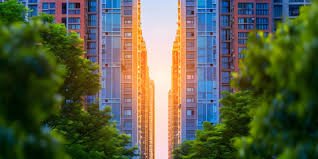
Our world is changing. As more people move to cities, the demand for housing is pushing urban planners and developers to look skyward. Instead of sprawling outward, our communities are growing upward. This shift toward vertical living is not just a passing trend; it is a fundamental response to the pressures of modern urbanization. High-rise residential buildings are reshaping city skylines and redefining how we live, work, and connect.
The Push Towards the Sky
The primary driver behind vertical living is urbanization. Global populations are increasingly concentrating in metropolitan areas, putting immense pressure on land and resources. Building horizontally requires vast amounts of space, which is often unavailable or prohibitively expensive in dense urban centers. Vertical construction offers a practical solution by maximizing housing capacity on a smaller footprint.
Efficiency in Urban Design
High-rise buildings are models of spatial efficiency. By stacking homes on top of one another, they can accommodate hundreds or even thousands of people in an area that might otherwise house only a few single-family homes. This consolidation of living space frees up land for other essential urban needs, such as parks, public transportation, and commercial centers. A well-planned vertical community can create a more organized and accessible urban environment.
This approach also streamlines infrastructure. Providing utilities like water, electricity, and internet to a single, dense building is often more efficient than extending these services across a sprawling suburb. Centralized systems reduce resource consumption and can lower maintenance costs, contributing to a more manageable urban grid.
Sustainability and Modern Construction
Vertical living aligns with many principles of sustainable development. By curbing urban sprawl, high-rise buildings help preserve natural landscapes and agricultural land that would otherwise be consumed by development. Compact, walkable cities reduce dependency on cars, which in turn lowers carbon emissions and improves air quality.
Modern construction techniques have also made skyscrapers greener than ever. Innovations in materials, energy-efficient window systems, and green roofs are becoming standard features. These advancements help minimize the environmental impact of tall buildings. The construction process itself has evolved, with an emphasis on safety and precision. For instance, a project requiring specialized lifting for heavy materials at significant heights might rely on a professional crane service in Utah to ensure components are placed correctly and securely, minimizing waste and ensuring structural integrity.
The Vertical Community Experience
Life in a high-rise is different from traditional suburban living. It fosters a unique sense of community. Residents often share amenities like gyms, pools, and rooftop gardens, creating opportunities for social interaction. This shared environment can lead to stronger neighborhood bonds within a single building.
Furthermore, vertical living often places residents at the heart of the action. With shops, restaurants, and workplaces just a short walk or elevator ride away, the convenience is unmatched. This “15-minute city” concept, where all necessities are easily accessible, enhances the quality of life and reduces the time spent commuting.
The Future of Living is Upward
As cities continue to grow, the trend of building up instead of out will only accelerate. Future skyscrapers will likely integrate even more advanced technologies, from smart home systems that optimize energy use to vertical farms that provide fresh produce to residents. These self-contained ecosystems will offer a new level of convenience and sustainability.
Vertical living is more than just an architectural choice; it is a strategic response to the challenges of the 21st century. By embracing height, we can build more efficient, sustainable, and connected communities for generations to come. The future of our cities is not on the horizon; it is reaching for the sky.